
If you’re working out consistently but still feeling sore, tight, or completely drained, your body might not need more workouts—it might need better recovery.
For a long time, I used to think rest days meant doing nothing… or honestly, skipping them altogether because I felt like I should be doing more. But over time, I realized that the way you recover has a huge impact on how strong, energized, and consistent you feel.
As a mom working from home, my schedule is full, and my workouts need to be efficient. I don’t have time to feel run down or overly sore every day. Recovery has become the thing that actually allows me to stay consistent—not just for a week or two, but long term.
And the best part is, it doesn’t have to be complicated or time-consuming.
This at-home recovery routine is simple, realistic, and something you can actually stick with—even on busy days.
Why Recovery Matters
Recovery is where your body actually rebuilds and gets stronger.

If you’re constantly sore, fatigued, or struggling to stay motivated, it’s usually not because you’re not doing enough—it’s because your body isn’t getting the support it needs between workouts.
A simple recovery routine can help reduce muscle soreness, improve flexibility and mobility, prevent injury, and keep your energy levels more stable.
And when your body feels better, it’s a lot easier to stay consistent.
My Simple At-Home Recovery Routine
This is the exact type of routine I fall back on during the week—especially on days when I’m balancing work, home life, and trying to fit in a workout.
It’s not perfect. It’s not long. But it works.
I usually start with 5–10 minutes of light movement just to get my body warmed up. Sometimes that’s a quick walk, sometimes it’s just moving around the house or doing a few bodyweight movements. Nothing intense—just enough to get things flowing.
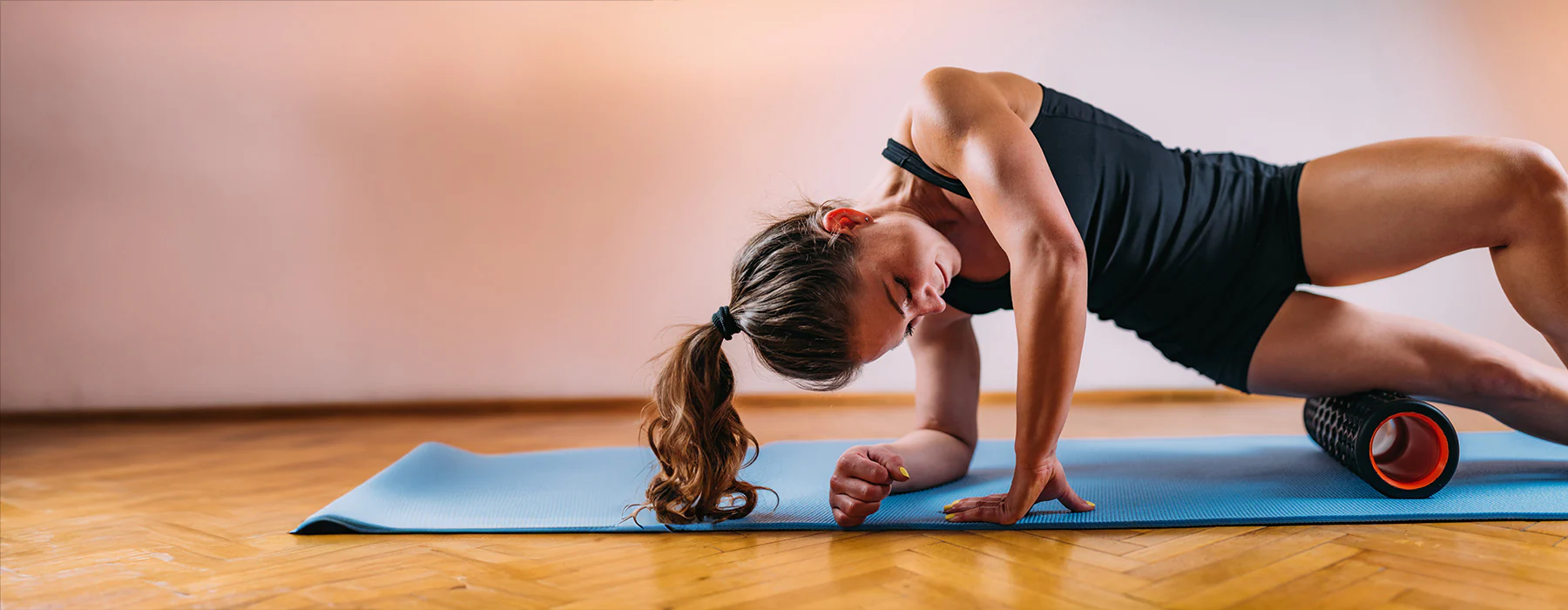
From there, I’ll spend about 5–10 minutes foam rolling. This has made one of the biggest differences for me, especially after lower body days. I focus mostly on my legs and glutes, and sometimes my upper back if I’ve been sitting at my computer a lot.
Then I move into 10–15 minutes of stretching and mobility. This is where I really slow down. I’ll focus on my hips, hamstrings, shoulders—basically wherever I’m feeling tight that day. Some days it’s quick, some days I stay here a little longer if I need it.
To finish, I take a couple minutes to just breathe and reset. It sounds simple, but it helps more than I expected. It’s like a small pause before jumping back into everything else.
Simple Recovery Tools That Make a Difference
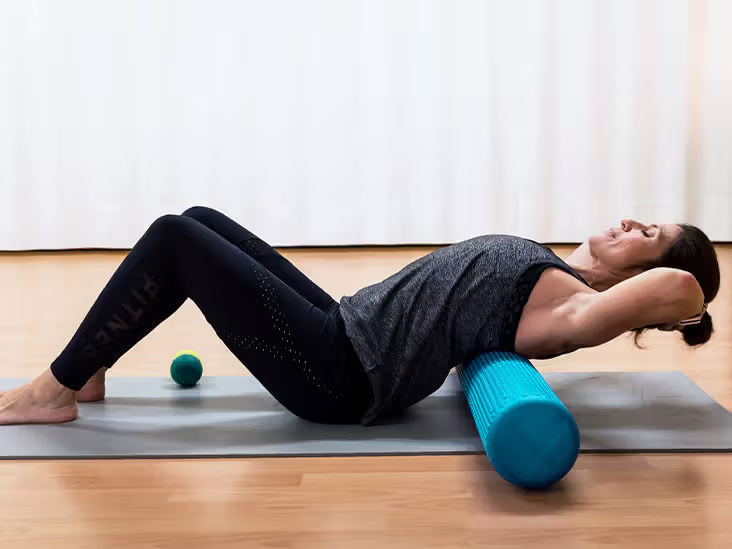
I like to keep things minimal at home, but there are a few things I use regularly that make recovery easier and more effective.
You can also shop all of my recovery and mobility tools here:👉
A foam roller is probably the one I use the most. It’s simple, but it really helps with muscle tightness and soreness, especially when I stay consistent with it.
→ Check out my favorite one here
A massage ball is great for smaller, more targeted areas—like shoulders or the bottoms of your feet. This is one of those things you don’t realize you need until you try it.
→This one is the best
A good yoga mat makes the whole routine more comfortable and helps create a space where you actually want to slow down for a few minutes.
→Check out my favorite one here
I also like having resistance bands nearby. I don’t always use them, but they’re helpful for light mobility work or activation on days when my body feels extra stiff.
→These ones have great reviews
How to Stay Consistent With Recovery
The biggest mistake I used to make was skipping recovery completely.
It felt like something extra I didn’t have time for, especially on busy days. But now I look at it differently—it’s part of what keeps everything else working.
It doesn’t have to be long. Some days it’s 10 minutes between work and everything going on at home. Other days it’s a little more intentional. Either way, it adds up.
And honestly, when my body feels better, everything else feels easier too.
Final Thoughts
If you’ve been pushing hard with your workouts but not seeing the results you expected, it might not be about doing more.
It might be about taking better care of your body in between.
Recovery isn’t a step back—it’s what allows you to keep moving forward.
And when you find a routine that actually fits into your life, that’s when things start to feel sustainable.
This article may contain affiliate links. If you purchase through these links, I may earn a small commission at no additional cost to you.